2300+ Publications
1500+ Labs
Tissue Engineering
Explore what tissue engineering is, and learn how 3D bioprinting enables the reproducible fabrication of tissue models for regenerative medicine, disease modeling, and drug discovery.
Our 3D bioprinters help researchers create both simple and complex tissue models, reducing reliance on animal studies and overcoming the limitations of conventional 2D cell culture systems.
The Interplay Between Tissue Engineering and Bioprinting
Tissue engineering is a biomedical discipline referring to the creation of artificial tissues through cell-laden scaffolds. While these tissue scaffolds can be created in several ways, 3D bioprinting has become the premier way to create these artificial tissues. The focus from researchers is vast, ranging from optimization of biomaterials for better mimicking of cell-tissue ECM interaction to in vitro models for drug testing and implantable tissue replacements.
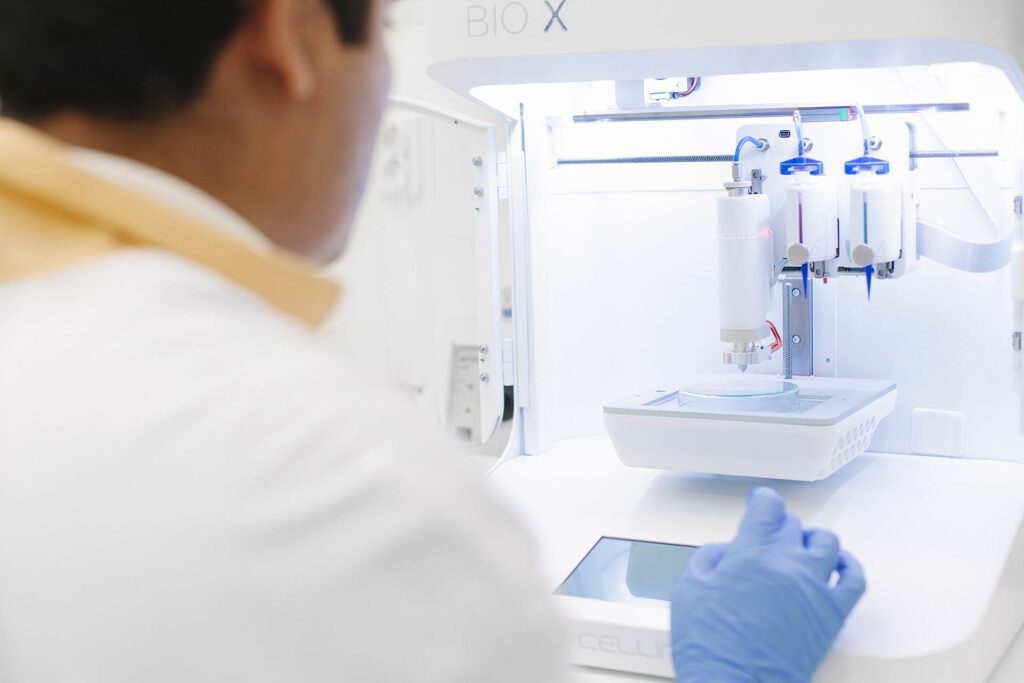
More than a thousand labs have chosen CELLINK’s portfolio of 3D bioprinters for their tissue engineering efforts, resulting in more than 2000 publications and counting!
By focusing on ease-of-use and flexibility, we enable everyone from cell biologists with no 3D printing background to tissue engineering experts with a lot of experience to get the most out of every print.
Bioprinters
| BIO X | Product information → |
| BIO X6 | Product information → |
| LUMEN X | Product information → |
| BIONOVA X | Product information → |
| BIO ONE | Product information → |
What is tissue engineering?
Tissue engineering is a field that combines biology, engineering, and material science to improve, restore, or replace biological tissues. It typically involves three core components: living cells, hydrogel-based scaffolds, and biochemical or mechanical signals.
In practice, tissue engineering works by embedding cells inside or seeding onto a scaffold that consists of a material mimicking the target tissue’s extracellular matrix. These constructs are then cultured under conditions that promote tissue development. The goal of tissue engineering is to create functional tissue models that resemble native structures, either for implantation (regenerative medicine) or in vitro use.
Benefits of Engineering Tissues
Tissue engineering is gaining widespread attention in biomedical research and regenerative medicine, as a way of creating the future of health. This field offers a powerful way to mimic or replace native tissue functions, leading to advances in personalized medicine, therapeutic development, and disease modeling.
Below are four key reasons more researchers are moving into tissue engineering using 3D bioprinting:
Customized Tissue Models
The ability to create customized tissue models is a major benefit of 3D bioprinting. Instead of being limited to ready-made tissue models, or 2D cell models, engineered tissues can be tailored to replicate patient- or disease-specific anatomy and pathology.
3D cell culture, as it is sometimes referred to, allows researchers to study disease progression or treatment efficacy in a more accurate context than traditional 2D cultures or animal models. Customization enables better predictive outcomes for both research and clinical applications.
Patient-specific Regenerative Healing
The true tissue regenerative potential of 3D bioprinting lies in its ability to produce biocompatible scaffolds that match a patient’s specific anatomy. For example, by using a patient’s own cells, researchers are developing “living patches” for wound healing, cartilage repair, and bone regeneration. These tissue-engineered constructs aim to integrate naturally with the body, providing a biological alternative to synthetic implants and reducing the long-term risk of immune rejection.
Reduced Reliance on Animal Testing
The most immediate impact of tissue engineering is on drug discovery and toxicology. Regulating bodies, such as the U.S’s FDA, are pushing the pharma industry to find alternatives to animal models.
By printing human-derived “organ-on-a-chip” models or 3D liver/kidney tissues, scientists can test how new drugs react with human biology long before they reach clinical trials. These 3D models are far more predictive than traditional 2D cell cultures and provide a much-needed alternative to animal testing, streamlining the path to safer therapeutics.
Advancements in 3D Bioprinting
The real benefit of 3D bioprinting isn’t just “printing bigger,” but “printing smarter”. Modern bioprinters like BIO X6 and BIONOVA X allow for the use of multiple bioinks, enabling researchers to mimic the complex, multi-layered architecture of native tissues.
This precision allows for better cell-to-cell communication and more accurate physiological responses, turning a lab experiment into a reliable representation of human biology.
How Tissue Engineering Works
Tissue engineering works by creating functional human tissues using technologies such as 3D bioprinting. This is done by guiding cells to grow in the optimal environment, enabling researchers to build patient-specific tissue models for drug testing, disease research, and regenerative medicine.
Explore our resources to learn the key methods, materials, and technologies driving modern tissue engineering approaches.
Resources
Challenges & Considerations
Tissue engineering offers exciting possibilities, but several challenges still affect progress:
Vascularization: Thick tissues need oxygen and metabolites supply through blood vessels to keep cells alive
Smart Biomaterials: Scaffolds must match natural tissue properties
Complexity: Real tissues contain multiple cell types and structures
Scalability: Lab-scale methods are difficult to translate to industrial-scale production
Ongoing research in biofabrication, advanced materials, and standardized workflows aim to address these tissue engineering challenges. Overcoming them will be essential for enabling reliable, clinically relevant tissue engineering solutions.
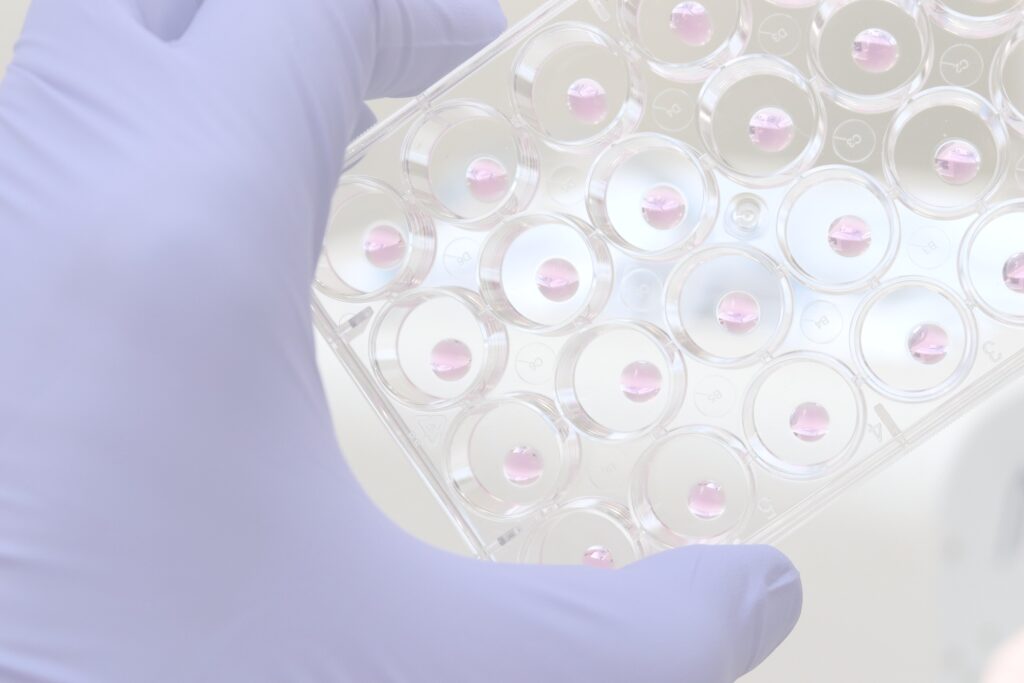
Image from the application note: “Evaluating Liver Toxicity in Bioprinted Mini Livers“
The Future of Tissue Engineering
Beyond the dream of printing whole organs, the next decade of tissue engineering will focus on precision tissue models, personalized medicine, and advanced drug screening. With cutting-edge 3D bioprinting technologies, researchers can now, for example, create patient-specific tissue constructs such as tumor models to test chemotherapy effectiveness in a controlled, lab-based environment.
Pharmaceutical companies are also increasingly leveraging bioprinted human tissue arrays to reduce and replace the need for animal testing, accelerating drug development while improving safety and efficacy. By advancing high-fidelity 3D tissue models, vascularized tissue constructs, and complex organoids, tissue engineering is paving the way for faster, safer, and more personalized therapeutic solutions.
The integration of bioprinting, scaffold design, and cellular engineering is transforming tissue engineering from a research frontier into a practical platform for personalized medicine, regenerative therapies, and next-generation drug discovery.