Description
CELLINK FIBRIN delivers the reliable printability of CELLINK Bioink, enhanced with fibrinogen for enzymatic crosslinking. After reacting with thrombin, it forms in situ fibrin and fibrinogen, creating a physiological wound‑healing environment that mimics blood clotting and supports vascularization. Formulated with our nanofibrillated cellulose, jointly patented with UPM‑Kymmene, CELLINK FIBRIN crosslinks easily with CaCl₂ Crosslinking Agent to create stable and supportive constructs.
Specifications
| Appearance | White semi-translucent gel |
| Sterility | Sterile |
| pH |
6.5-7.4 |
| Viscosity | 2.6-7.5 kPa∙s at 0.01 s-1; 1.0-1.9 Pa∙s at 200 s-1 |
| Shelf life | Minimum 3 months |
| Storage conditions | 2-10°C, do not freeze |
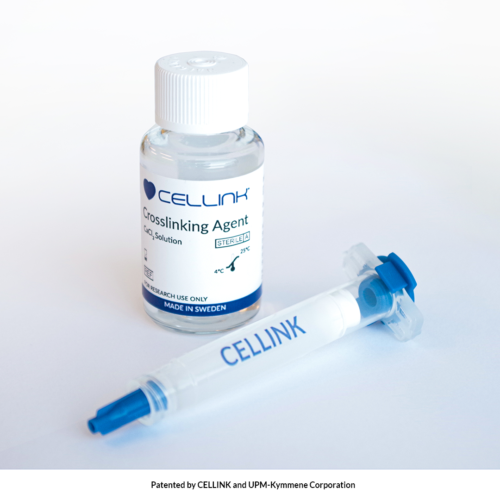
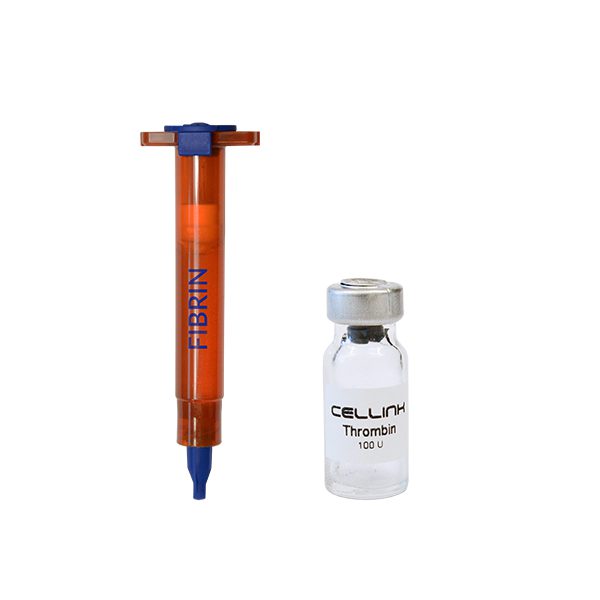
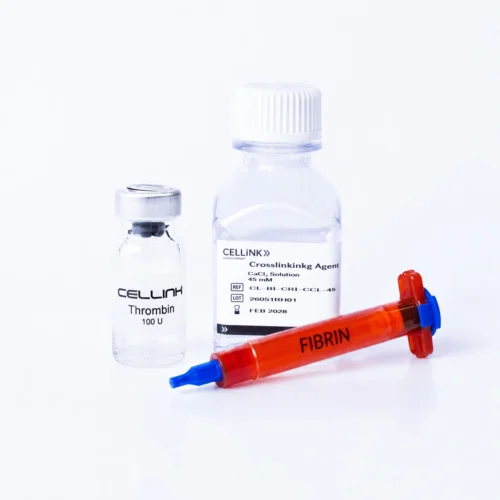
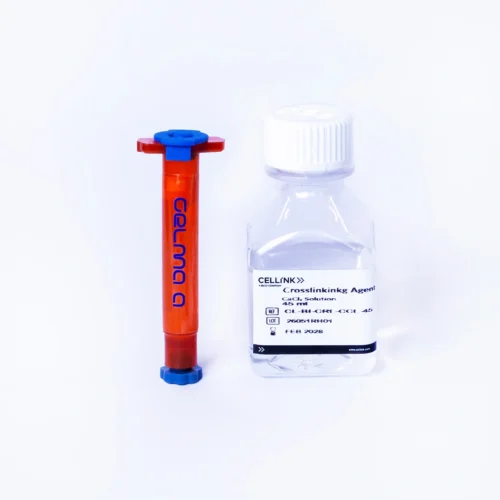
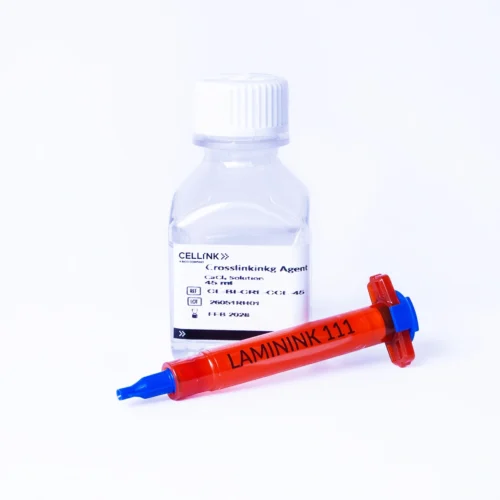
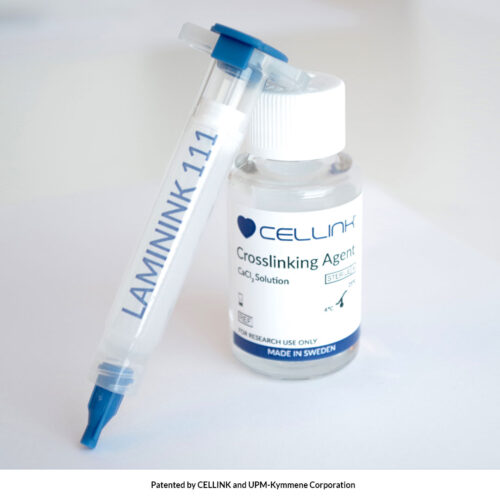
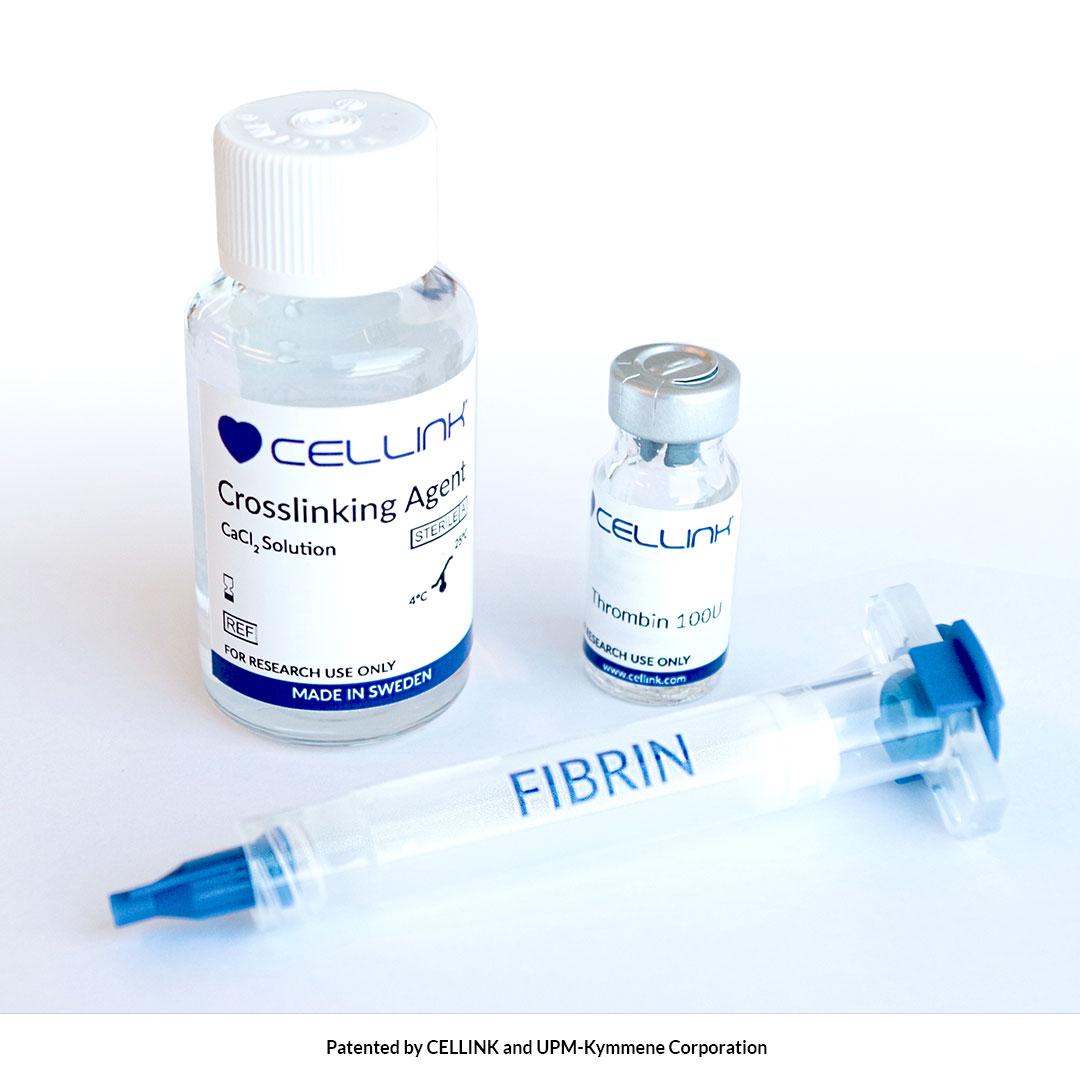
| Kit components | CELLINK Fibrin 1×3 mL cartridge CaCl2 Crosslinking Agent, 45 mL Thrombin |
| Use | For research use only. Not for human use. |
Publications
3D Co-Printing and Substrate Geometry Influence the Differentiation of C2C12 Skeletal Myoblasts
Loi, G; Scocozza, F; Aliberti, F; Rinvenuto, L; Cidonio, G; Marchesi, N; Benedetti, L; Ceccarelli, G; Conti, M. Gels (Basel, Switzerland), 9(7), 595. (2023)
https://doi.org/10.3390/gels9070595
Myoblast 3D bioprinting to burst in vitro skeletal muscle differentiation
Ronzoni, FL; Aliberti, F; Scocozza, F; Benedetti, L; Auricchio, F; Sampaolesi, M; Cusella, G; Redwan, IN; Ceccarelli, G; Conti, M. Journal of Tissue Engineering and Regenerative Medicine, 16(5), 484–495. (2022)
https://doi.org/10.1002/term.3293
Printing support hydrogels for creating vascular‑like structures in stacked cell sheets
Tanaka, R. I; Sakaguchi, K; Umezu, S. Artificial Life and Robotics, 25(2), 199–203. (2020)
https://doi.org/10.1007/s10015-020-00605-7