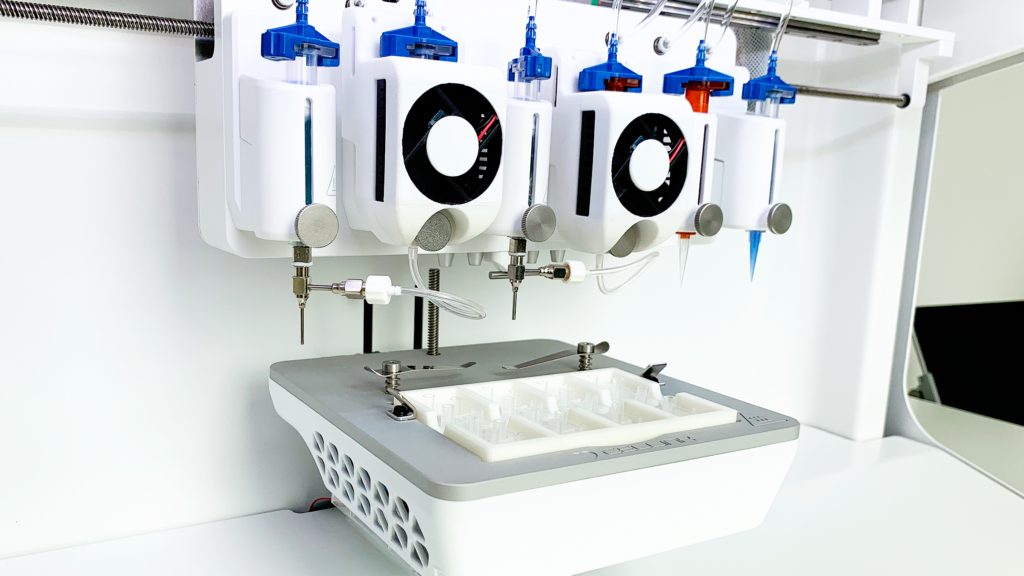
3D bioprinted microfluidic in vitro model of the proximal tubule
Drug-induced nephrotoxicity is one of the major adverse effects observed during clinical drug development. Current models lack predictivity of safety and efficacy, so there is a significant demand for a reliable proximal tubule (PT) in vitro model with a design that allows automated fabrication, unidirectional perfusion and a parallelized set up to meet industrial standards. 3D bioprinting is a promising strategy for automated generation of perfusable channels via coaxial printing of a cell-laden shell layer and a sacrificial core, while eliminating the cell seeding step after fabrication.